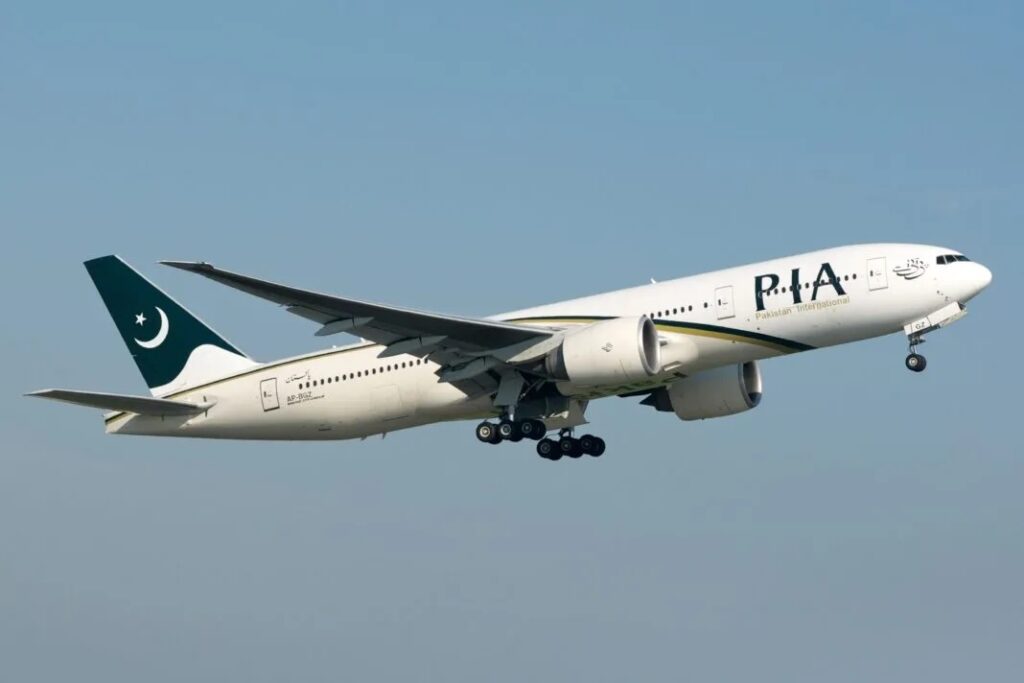
As tensions in the Middle East escalate, Pakistan International Airlines (PIA) announced on Wednesday that it would suspend flights to Fujairah in the UAE for 48 hours. The airline also decided to limit its operations in the UAE to Al Ain, an inland city on the border with Oman.
PIA officials said the situation is being closely monitored and further changes could be made if the unrest continues. Passengers are urged to keep an eye on flight schedules and stay in touch with the airline for updates.
Also Read : CPPA Requests Rs1.64 Per Unit Increase in Electricity Tariff for February
The ongoing conflict in the Gulf region has already caused major disruptions to Pakistan’s air travel, with 92 flights canceled across key airports. This has stranded passengers and forced airlines to reduce their services.
The cancellations have affected flights connecting Pakistan to important destinations in the Gulf and beyond. The impact of regional instability is now being felt across global aviation networks.
Flight Cancellations Across Pakistan
Lahore’s Allama Iqbal International Airport saw 18 flights canceled, including routes to Kuwait, Doha, and Bahrain.
Karachi’s Jinnah International Airport faced at least 20 flight cancellations to destinations like Doha, Kuwait, Bahrain, and Iran.
Islamabad International Airport was hit hardest, with 28 canceled flights to places like Dubai, Doha, Bahrain, and Muscat.
Peshawar Airport had 16 flights to Doha, Dubai, and Abu Dhabi canceled.
Smaller airports were also affected. Multan had four cancellations, and Sialkot saw six flights to cities like Dubai, Doha, and Riyadh suspended. However, Faisalabad Airport remained unaffected, with flights operating as scheduled.
A Wider Global Impact
The disruption in Pakistan is just one part of a larger ripple effect on global aviation. The Middle East is a key air travel hub, and the rising tensions have forced airlines to rethink their flight routes and safety measures.
Aviation experts warn that even small airspace restrictions can cause significant delays worldwide. As a result, many airlines are rerouting flights to avoid conflict zones, which increases flight times, fuel costs, and complicates scheduling for crews and aircraft.
Several major airlines have already adjusted their operations. Some have suspended routes, while others are taking longer, more expensive flight paths. Global aviation bodies, such as the International Air Transport Association (IATA) and the International Civil Aviation Organization (ICAO), have issued risk advisories, urging airlines to adjust their operations as the situation evolves.