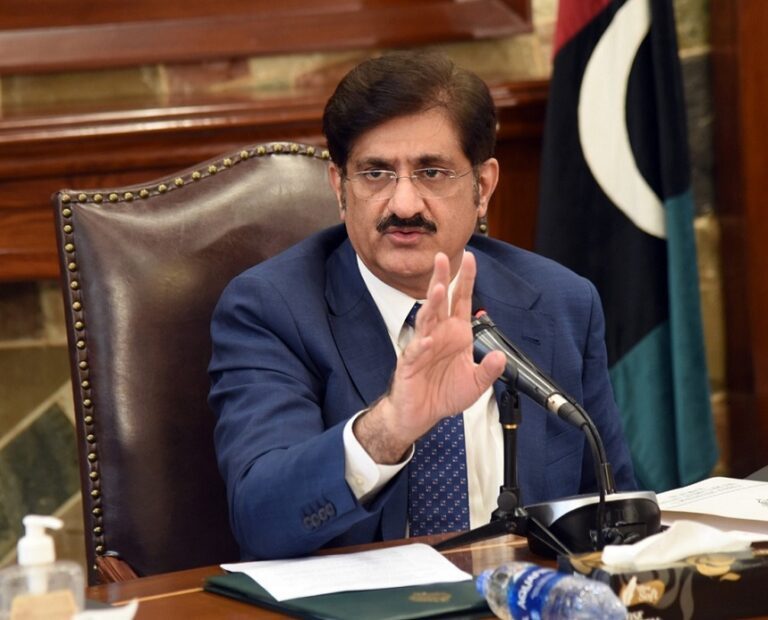
Sindh Chief Minister Syed Murad Ali Shah has approved the construction of a new bridge over the Indus River to improve travel between Sukkur and Rohri. The project aims to reduce heavy traffic on existing bridges.
The approval came during the 51st meeting of the Public-Private Partnership (PPP) Policy Board at the Chief Minister’s House. Provincial ministers, officials, and other stakeholders attended the meeting.
The new bridge is planned to address growing traffic between Sukkur, Rohri, and nearby towns. Currently, residents rely on old and limited infrastructure. About 70% of people from Rohri, Salehpat, and Pano Aqil commute to Sukkur every day for work, school, healthcare, and business.
Also Read : Karachi Hit by Heavy Rain and Strong Winds, Power Outages Reported Across City
The historic Lansdowne Bridge, the main crossing, handles over 30,000 vehicles daily but is under heavy strain. Access via the Sukkur Barrage is closed for maintenance until at least 2027. The CM highlighted that traffic restrictions on the bridge often cause delays and affect emergency services.
The PPP Board approved a Project Development Facility to hire advisors for the new Sukkur–Rohri Bridge project. The Sindh Local Government Department will carry out the project under the PPP model.
The bridge will be about 1.5 kilometers long, built north of Bukkur Island. It will have multiple lanes for vehicles and separate walkways for pedestrians.
Local Government Minister Syed Nasir Hussain Shah welcomed the project, saying it will greatly reduce traffic congestion and improve connectivity for residents.
The PPP Board also reviewed other projects:
- Shahrah-e-Bhutto Expressway: 39 km high-speed road is 88.2% complete. CM directed authorities to finish it by April 2026.
- Solar Streetlights: Installation and 25-year maintenance approved for a 4.5 km elevated section at Sammo Goth.
- Kathore Interchange: Feasibility study and design approved for smooth connection at the expressway’s end.
The board also introduced new rules to improve transparency and financial discipline in PPP projects:
- Bids more than 15% higher or lower than estimated will be rejected.
- Guidelines for unsolicited project proposals include a “Right of First Refusal,” allowing project initiators to match winning bids or get reimbursed for development costs within limits.
These reforms aim to make infrastructure development in Sindh more efficient, transparent, and investor-friendly.