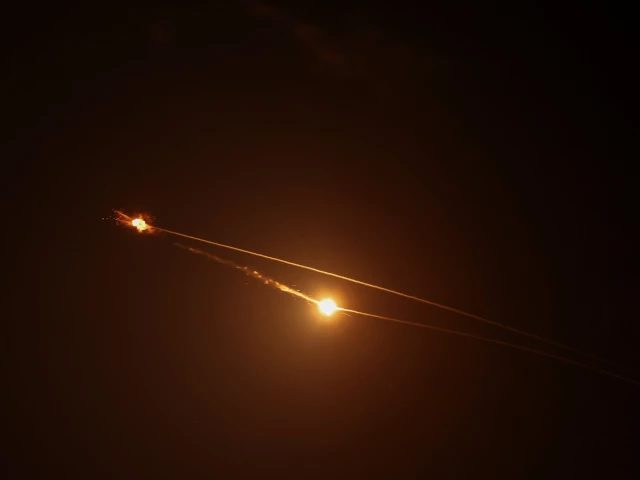
Iran launched Multiple waves of missile attacks on Israel on Sunday, hitting central areas and triggering air raid sirens across multiple regions, according to social media reports and statements cited by Drop Site News.
The missiles targeted different locations, including central and southern Israel. Early reports suggest some damage, though the full extent of casualties or destruction is not yet confirmed. Videos and eyewitness accounts showed explosions and Israeli air defenses intercepting incoming missiles. Authorities urged residents to take shelter while emergency teams assessed the impact.
Images circulating online showed damage to buildings and infrastructure in Holon, south of Tel Aviv, though independent verification of casualties or destruction was not available.
These attacks come amid growing tensions between Iran, Israel, and the United States, with both sides exchanging strikes over the past weeks. Previous missile attacks have targeted major Israeli cities and infrastructure, causing injuries and property damage despite air defense measures.
There was no immediate official statement from Israel detailing the damage from Sunday’s strikes. Iranian officials have described the missile launches as retaliation for Israeli and US military actions.
Meanwhile, former US President Donald Trump said Iran seemed willing to negotiate an end to the conflict but claimed the deal terms were “not good enough yet.” He also warned that the US could carry out more strikes on Kharg Island, a key hub for Iranian oil exports.
In a telephone interview with NBC News, Trump said Tehran wanted negotiations but insisted that any agreement would require Iran to abandon its nuclear ambitions.
“Iran wanted to make a deal, but I’m unwilling to do so now because the terms are not good enough yet,” Trump said. He did not provide specifics but emphasized that Iran’s nuclear program would be a central issue in any potential agreement.
Trump also said several countries had pledged to help secure the Strait of Hormuz, a vital global oil route, though he did not name them. He claimed US strikes had heavily damaged most of Kharg Island and suggested more attacks could follow.
Trump made controversial comments regarding Iran’s new supreme leader, Mojtaba Khamenei, the son of the late Ali Khamenei. He questioned Khamenei’s status and advised that he “do something smart” for his country, implying surrender.
Iran’s Revolutionary Guards reported missile and drone attacks on Israel and three US bases in the region, calling it the first round of retaliation for Iranian workers killed in industrial areas. Israel said it intercepted incoming launches.
Saudi Arabia reported intercepting 10 drones in Riyadh and the east. Iran denied any involvement in these attacks. Meanwhile, a drone strike disrupted a major energy hub in the United Arab Emirates, prompting Washington to warn US citizens to leave Iraq after a missile attack on the US embassy in Baghdad.
Oil operations at Fujairah, a key refueling hub in the UAE, have resumed after the drone attack.
Since February 28, when Israel and the US began airstrikes on Iran, more than 2,000 people—mostly Iranians—have reportedly died. Airstrikes have hit factories and other industrial sites, causing casualties and damage.
Iran has urged civilians in the UAE to evacuate ports and areas linked to US forces, though the UAE denied any attacks on Kharg Island originated from its territory. Iran’s Islamic Revolutionary Guard Corps called US facilities “legitimate targets” and warned US industries to leave the region.
Russia has supplied Iran with Shahed drones for use against the US and Israel, according to Ukrainian President Volodymyr Zelenskiy. Some oil-loading operations in Fujairah were temporarily suspended after drone attacks.
The US military said it struck over 90 targets on Kharg Island, including missile bunkers and naval facilities. Iranian officials downplayed the damage. Iran’s foreign minister, Abbas Araqchi, dismissed rumors about Khamenei being injured, confirming that he is performing his duties.
Iran launched nine ballistic missiles and 33 drones toward the UAE, warning residents to stay away from ports in Dubai, Abu Dhabi, and Fujairah. Fujairah handles about one million barrels of crude oil per day, around 1% of global demand.
Trump urged countries like China, France, Japan, South Korea, and Britain to send warships to secure the Strait of Hormuz, though no country immediately agreed. Japan said its constitution makes military action difficult, while France is planning a coalition, and Britain is exploring options.
Iran’s Supreme Leader, Mojtaba Khamenei, has stated that the Strait of Hormuz should remain closed.
In Iran, 20 people were arrested for allegedly sharing military information with Israel. Israel reportedly used informants to guide new attacks on Iran.
Ukraine has sent experts to Middle Eastern nations to help defend against Iranian drones, seeking money and technology in return.
Iran’s foreign minister also stated that Tehran is ready to form a committee with neighboring countries to investigate strikes and ensure accountability. Gulf countries have urged Iran to stop attacking their territories.