
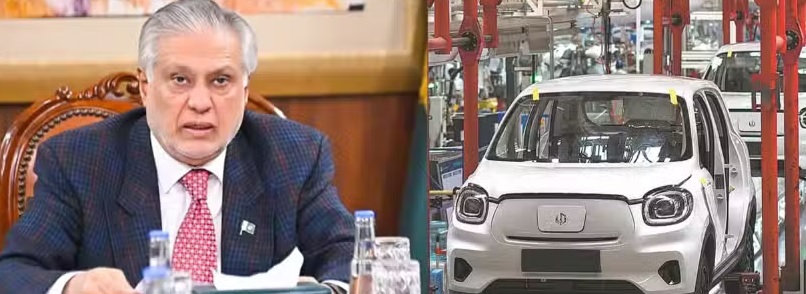
Pakistan has reached a major step in finalizing its new Auto Policy 2026–31.
A steering committee led by Finance Minister Ishaq Dar has reached a consensus on the policy. The committee will now incorporate input from the Ministry of Industries and Production before the proposal moves to the federal cabinet.
Officials involved in the policymaking process told ProPakistani that the committee has completed its review of the proposed policy. The finalized proposal will be submitted to the Ministry of Industries and Production, along with the committee’s recommendations.
The ministry will then process the proposal before sending it to the federal cabinet for final approval.
New Auto Policy Faces Several Challenges
The new policy has faced delays following discussions on the FY2026–27 budget.
The government and local automobile industry had differences over several key areas. These included electric vehicles, hybrid vehicles, taxation, and local manufacturing.
The new policy aims to support Pakistan’s shift toward cleaner transportation. It is expected to focus on increasing electric and hybrid vehicle production in the country.
The government also wants to encourage local manufacturing and technology transfer. Another goal is to reduce the country’s dependence on imported petroleum products.
Previous Auto Policy Expired
Pakistan’s previous Auto Industry Development and Export Policy 2021–26 expired on June 30, 2026.
The expiry also affected tax concessions for hybrid vehicles.
From July 1, the sales tax on hybrid electric vehicles (HEVs) and plug-in hybrid vehicles increased from 8.5% to 25%. The increase has contributed to higher vehicle prices.
The uncertainty surrounding the new policy has also affected the automobile market. Some manufacturers have reportedly delayed vehicle deliveries while waiting for greater clarity on the government’s new framework.
Automakers Seek a Gradual Transition
Local automobile manufacturers have raised concerns about the government’s earlier EV-focused proposals.
Industry representatives have called for temporary support for hybrid vehicles as Pakistan moves toward electric mobility.
Dealers and other industry stakeholders generally support the transition to electric vehicles. However, they have urged the government to take a gradual approach.
They have also emphasized the importance of increasing local production and localization.
Industry stakeholders have warned that overly generous incentives for imported electric vehicles could lead to a rise in completely built-up vehicle imports. They argue that the policy should encourage local manufacturing rather than increase dependence on imported vehicles.
What Happens Next?
The proposed Auto Policy 2026–31 will now move to the Ministry of Industries and Production before being presented to the federal cabinet.
The cabinet will have the final say on the policy.
Key issues will include taxation, incentives for electric vehicles, the treatment of hybrid vehicles, localization targets, and the pace of Pakistan’s transition toward electric mobility.
The approval of the new policy could provide much-needed clarity to automakers, dealers, and consumers after months of uncertainty.