
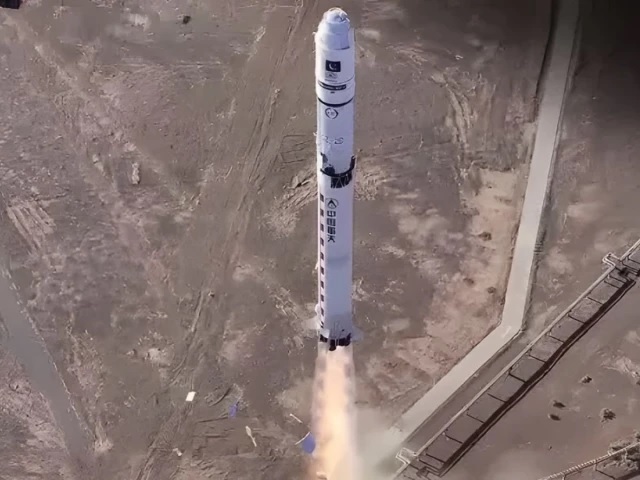
Pakistan successfully launches first hyperspectral satellite from china, called HS-1. This is an important step forward in the country’s space program and shows growing progress in using advanced technology for national development.
The satellite was launched by SUPARCO (Pakistan Space and Upper Atmosphere Research Commission). It is designed to capture very detailed images of the Earth using hundreds of light bands. This allows scientists to study land, crops, water, and cities more accurately than before.
With this new technology, Pakistan will be able to improve farming by checking crop health, soil moisture, and water quality. It will also help monitor environmental changes such as deforestation, pollution, and melting glaciers.
Another major benefit of HS-1 is disaster management. The satellite will support early warning systems and help assess damage after floods and landslides, especially in northern areas. It can also assist in large projects like CPEC by identifying risks such as landslides before construction begins.
SUPARCO Chairman Muhammad Yousaf Khan congratulated the nation and thanked the government for its support. He said the satellite will help increase agricultural productivity, improve climate response, and manage natural resources better.
Project Director Mushtaque Hussain Soomro also praised the team’s hard work. He said this mission is a big step in Pakistan’s space journey and shows the country’s potential to grow in space technology.
The launch also highlights the strong partnership between Pakistan and China in space research. Overall, HS-1 is expected to play an important role in improving the country’s economy, environment, and disaster response systems.